"Silli – Nature’s Intricate Dance by the Kirats"
I had not attended many Rai cultural programs, but there was always something captivating about them whenever I came across conversations or music related to the community. Apart from the soulful songs by artists like Bartika Eam Rai, Purna, and John Rai, I hadn’t explored much of my own cultural roots. The depth and richness of Rai traditions remained largely unfamiliar to me—until last night.
It was during a conversation with Bison Da that I was introduced to the profound significance of the Silli dance and the intricacies of Kirat culture. His words offered me a glimpse into a world of sacred stories, spiritual rituals, and embodied expressions of nature.
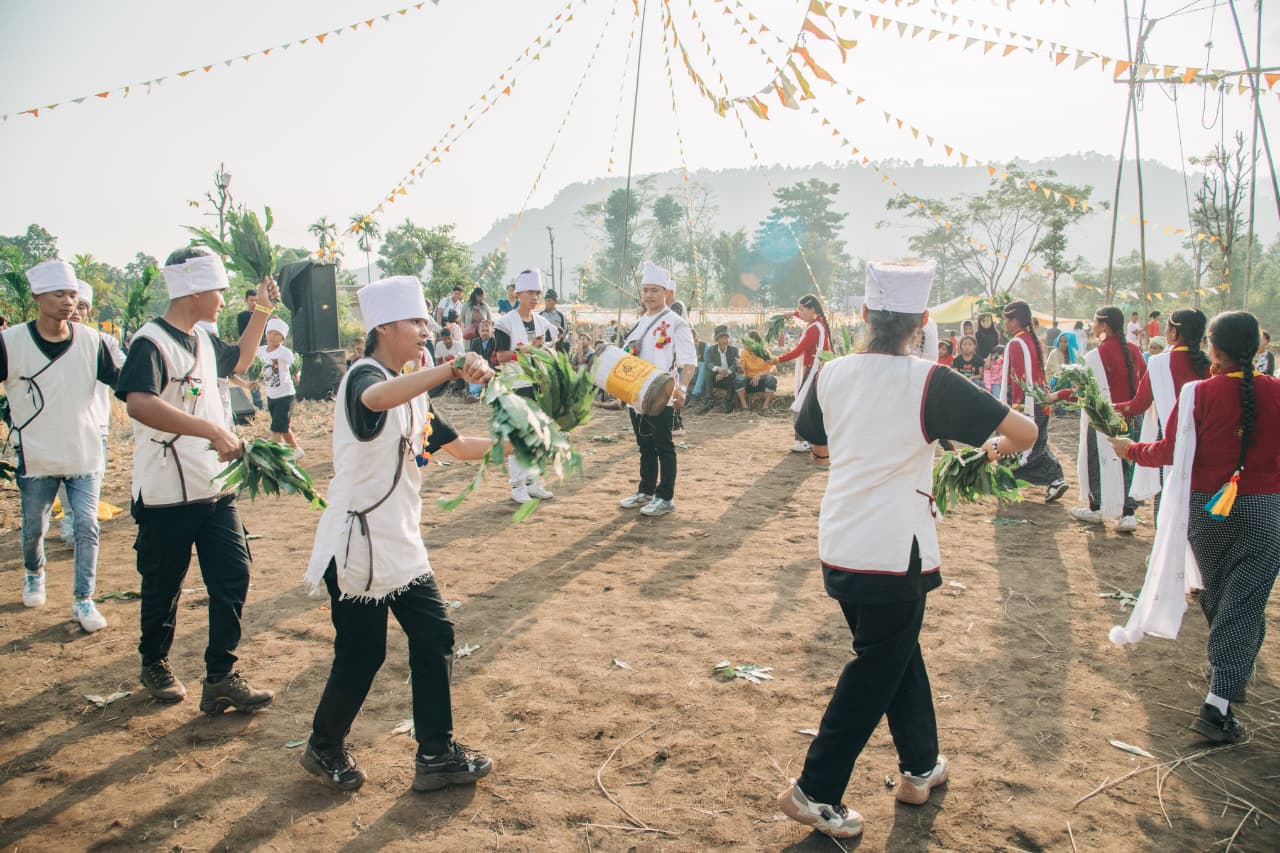
The term Rai itself means “King,” a title believed to have originated from the community’s historical strength and undefeated lineage. Among the many cultural elements preserved by the Kirat community, Silli stands out as a sacred and dynamic dance form. It draws its inspiration directly from nature—its movements, rhythms, and spirit. In essence, Silli is a Natak a performative tribute that imitates both living and non-living elements of the natural world, expressing the interconnectedness between the physical and spiritual realms.
In Rai cosmology, this dance is dedicated to the Creator Goddess Sumnima, who is believed to have given birth to Prakriti (nature). Leading this cosmic performance is Silli Hangma—“Silli” referring to the dance, and “Hangma” meaning queen. According to oral traditions, Silli Hangma was none other than Soi Soila, the first dancer of the Kirati community. It was Soi Soila who first performed the Silli dance and demonstrated how it should be done with precision, grace, and spiritual alignment.
Even today, if you observe a Silli performance, you’ll notice that dancers cry out, “Soi Soi La! Soi Soi La!” during the act. This is not just a chant—it is an invocation. By calling her name, the dancers are essentially saying, “We are performing the dance that you have taught us. Please correct us if we falter and guide us to do it right.” It is believed that the spirit of Soi Soila herself watches over the dance and that her name, when called with sincerity, brings her presence among the performers to guide and correct any missteps. This sacred connection continues to be honored, ensuring that the tradition remains not only technically accurate but also spiritually authentic.
There are 144 types of Silli dances performed by the Kirat community, each mimicking the behavior, motion, or expression of life on Earth. These forms portray movements such as how a chicken pecks and walks, or the actions of a monkey in play. Some examples include Chasung Silli, Narowa Silli (which represent lightning and thunderstorms), Wappa Silli, and Wangpa Silli, among others. Each form is more than a performance; it is a mirror of the natural world.
Among these, Mang Silli (also known as Mung Silli) is considered the most sacred of all. Unlike other Silli forms, Mang Silli is not performed by common people. This form is said to be performed by the Kirati gods themselves. Therefore, it is only allowed to be enacted by specific individuals in the community known as Mangpa—sacred shamans believed to be chosen by the divine. According to Kirati oral history, the first Mangpa was one of the eight sons of King Yalambar, a legendary figure in Kirat history. Among his sons, one was chosen by the gods themselves to become the sacred conduit between the human and spiritual realms. It was he who became the first Mangpa—a divine selection that continues in spirit with every Mangpa who follows.It is said that only a mangpa may perform Mang Silli, as it holds a divine essence that transcends human capability.
There are three distinct types of Mangpa in the Kirat tradition:
1. Mangpa – The primary shaman who performs Mang Silli and conducts holy death rituals such as Chinta. They are responsible for guiding the souls of the dead to their next destination.
2. Mopa – A priest who serves at the Mangkhim (the Kirat temple) but does not perform death rites like Chinta.
3. Raipa – A spiritual figure who is deeply knowledgeable in the Mundum, the sacred oral scriptures and philosophy of the Kirats.
Among these spiritual practitioners, there exists a rare kind called Reshiya—often referred to as Sadhu Mangpa. A Reshiya is one in thousands of Mangpa, known for their rare spiritual power and their ability to sing Mundhum with such deep resonance that their chants are said to make the Earth tremble and the spirits rise. Their Mundum holds such energy that it is believed they can summon both divine and demonic spirits and bring peace to even the angriest of entities.
The Silli dance is performed to the rhythmic beats of traditional Kirati musical instruments, most notably the Dhol and Dhyangro. These instruments themselves hold sacred variations:
The Dhol and Dhyangro used by the Mangpa during spiritual rituals are called Paruken and Sumniken.
The instruments used specifically during Silli dances are known as Silli Ken.
Even today, the Kirat community preserves and cherishes the Silli dance—not just as performance art, but as a living prayer, a tribute to nature, and a cultural thread that binds them to their gods, their land, and their ancestors.