"Embers of the Past: The Untold story of the Samkhalung"
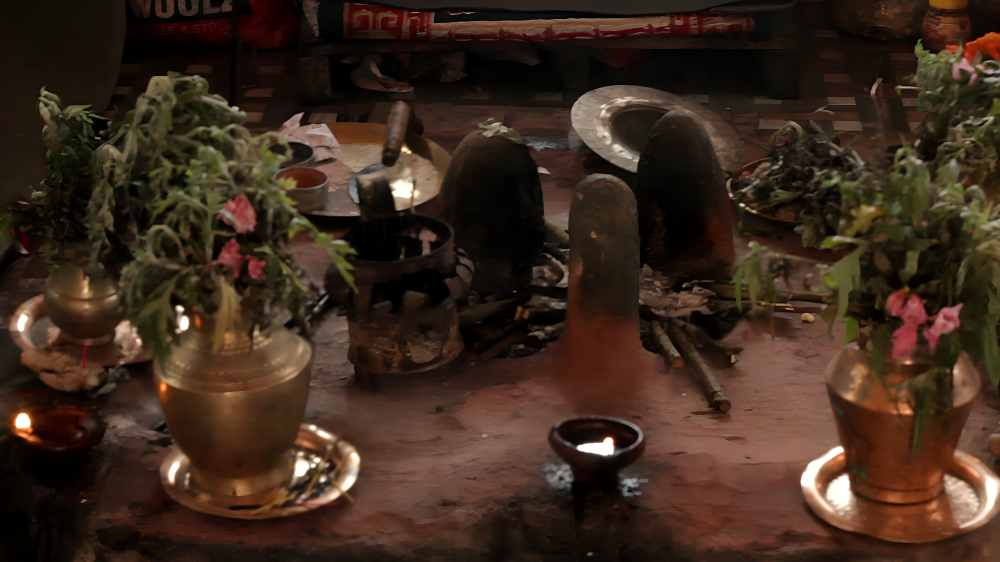
In the heart of every Rai household, there’s a quiet fire that tells the loudest stories. It doesn’t roar—it glows. It doesn’t move—but it holds generations together. This fire burns within the Chuladhunga, a sacred triangle of stones nestled in a space known as the Samkhalung or Chulakotha.
This article delves into the spiritual and cultural significance of the Samkhalung, exploring the ancestral hearthstones—Chula Dhunga—that lie at the heart of Rai homes and rituals. Three stones : A home
To the casual eye, the Chuladhunga might be nothing more than three stones arranged in a triangle. But to the Rais, those stones are sacred. They're selected carefully, set with a prayer, and never disturbed lightly. The flame between them isn't a simple heat source—it's a living bridge to the people who came before.
The designations and functions of the three stones differ across Rai clans, particularly based on the Pachha (lineage or sub-clan). For the Bantawa clan, the hearth stones are referred to as:
Makhalung-Symbolizing the spirits of female deceased members and, in certain situations, called on for women who are still alive in rituals.
Pakhalung-Left for the spirits of deceased male members and called upon in rituals relating to living males.
Ramilung-Linked with guardian spirits or lost souls, called upon to guard and protect the family.However, some clans of the Rai community also regard Ramilung as a stone that symbolizes the ‘Hunters,’ reflecting the belief that the Rai people were originally hunters.”
These stones are all enshrined together in the Samkhalung. Some of the sub-clans also call this holy place Sumtuplung, a combination of "Sum" (three) and "Tuplung" (buried stones), also called Gare Ko Dhunga in Nepali. In the Mundum—the Kirati people's oral scripture—this holy place is called Sumtulung, highlighting its spiritual significance throughout the Rai worldview.
Origins and Construction
Historically, all three stones employed in the Chuladhunga come from three different rivers that flow from three different directions. The mud that holds them together is collected from around them, representing the Earth's 1:3 proportion of land to sea. This proportion is symbolic of a more profound cosmic equilibrium between earth and spirit.
There are also some oral traditions that mention a fourth stone, the Thepchelung, which was set below the other visible hearth stones. This stone was still warm even when the central fire was put out. During the past, when Rai families were hunters or gatherers and frequently went out of the house for days, the Thepchelung kept things warm so that the fire could be readily re-lit—symbolically keeping the ancestral flame from ever really dying.
Of the three visible stones, the one known as Makhalung, the stone symbolizing deceased female spirits, is traditionally positioned to face the side door of the house. This door, the Jhaskyalo. In the past in a typical Rai house, there existed two doors: the main door and the Jhaskyalo. The orientation of the Makhalung towards the jhaskyalo reflects a cultural understanding of gendered space and spiritual guardianship—preserving the feminine essence within the home, even in the afterlife.
Role of the Chuladhunga
The Chuladhunga occupies a key position in significant life-cycle ceremonies and religious rituals. Rituals like Pitripuja involve the presentation of offerings where traditional products like rice, millet, wheat, tongba (millet beer), and flowers are presented around the hearth. The offerings are used to appease the ancestors, receive blessings, and ensure balance between the world of spirits and the home.
Prior to and subsequent to important events in life—such as birth, marriage, and death—the Chuladhunga is ritually invoked. Thanks are expressed by the families for the blessings or protection and guidance are sought from their family spirits. The fire kindled inside the hearth in these rituals is powerful and revered. It is never to be doused with casual recklessness. In extended rituals, particularly when headed by shamans (Mangpa/Mangma), sometimes the fire will be continuously burned for several days as a figurative presence of ancestors.
Cultural Roles of Men and Women
Participation in rituals near the Chuladhunga usually conforms to traditional gender norms, but these differ regionally and according to lineage. In general, male relatives of the family or specific shamans (Nakchhong or Mangpa) are the ones allowed to conduct rituals in direct contact with the hearth, particularly in the case of formal ancestor worship or seasonal rituals.
Womenare usually prohibited from engaging directly in offerings that are sacred, especially in the event of mourning or menstruation, since they are regarded as ritually unclean under conventional norms. In the absence of the male members if the family the women are able to engage directly in such sacred offerings these practices tend to vary tremendously between Rai subgroups and continue changing with time.
This role tradition is premised on the notion that men bring forward ancestral lineage, because daughters, under customary norms, have to take up residence with another family on marriage.
Intergenerational Legacy and Sacred Continuity
The Chuladhunga is not just a physical building—it is an intergenerational legacy. The hearth stones are seldom replaced except for a profound spiritual reason, like a shamanic vision or the reconstruction of a burned-down dwelling. Numerous families regard the stones so sacred that they take them to new dwellings when they move, maintaining the ancestral bond and spiritual protection associated with the original stones.
In this manner, the Chuladhunga is a symbol of continuity, bridging generations in terms of fire, stone, and memory. It symbolizes not just the togetherness of the family but also its long-term relationship with the world of spirits—a silent yet forceful testament to life, death, and heritage.
Conclusion
The Chuladhunga is much more than a home feature—it is an alive shrine. It ties the current generation of the Rai people to their ancestral past via stone, fire, and ritual. Be they called Samkhalung, Sumtuplung, or Chulakotha, this ritual hearth continues to be the linchpin of Rai identity and spiritual tradition. With each spark ignited and oblation given, the stones quietly speak of what has gone before, and thereby keep the sacred fire aglow across generations.