"Purpose:"
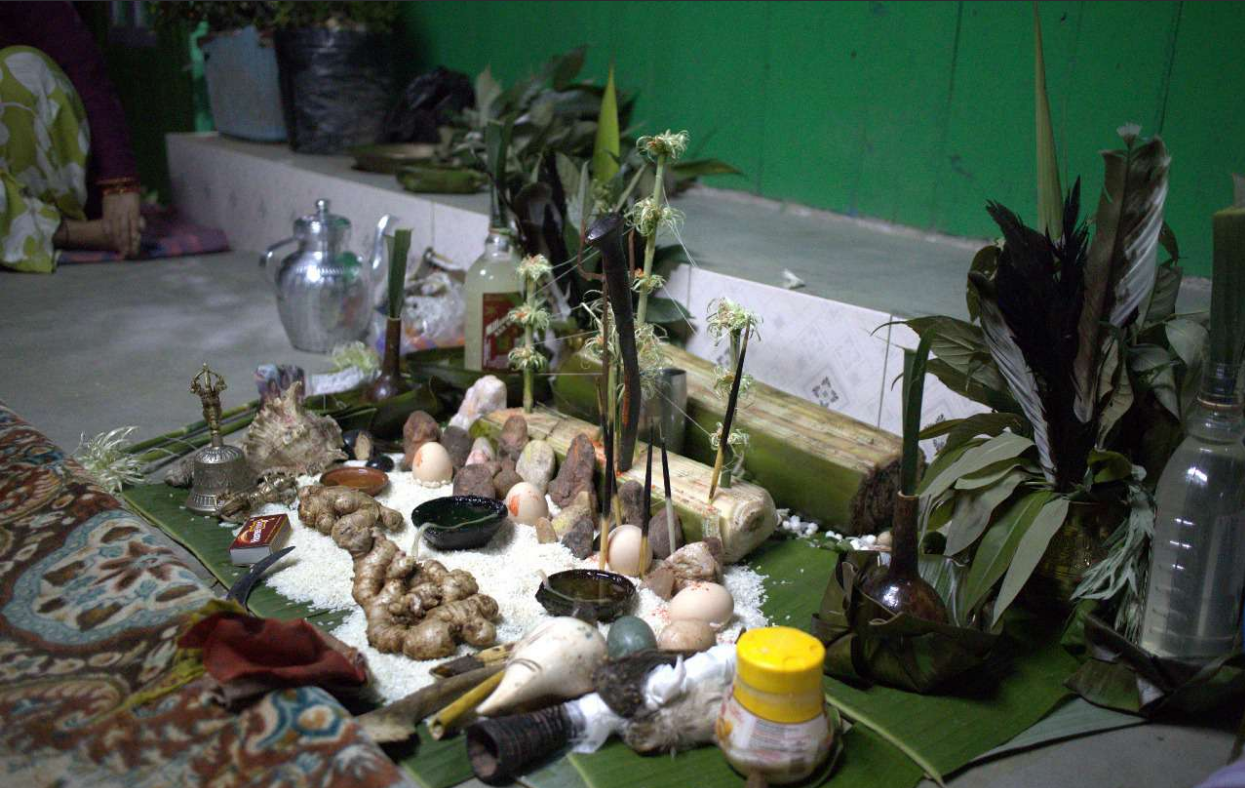
To cure diseases, remove hexes, curses, and restore spiritual balance.
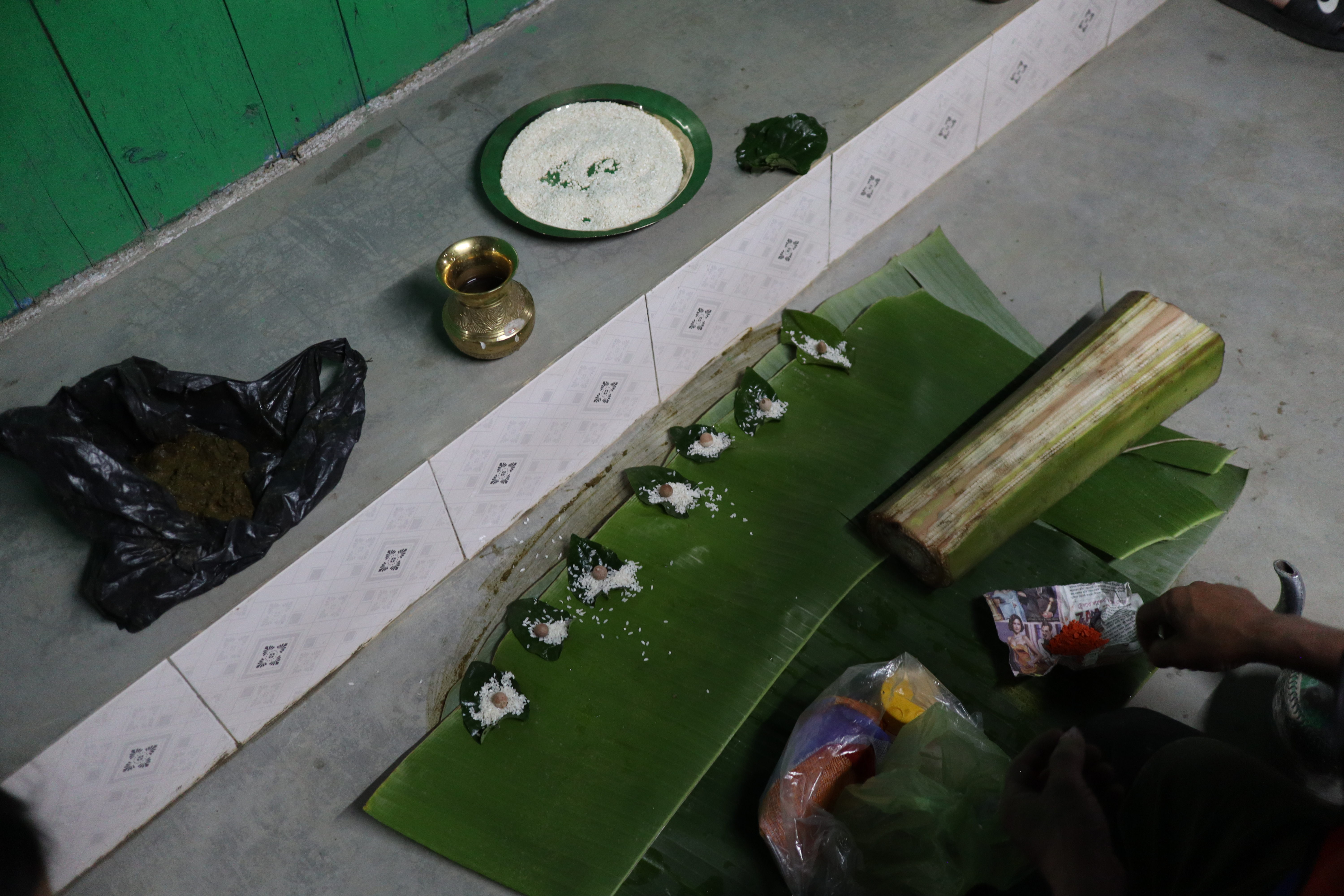
1. Ground Preparation The ritual space is first purified using gobar (cow dung), believed to ward off negativity and sanctify the ground
Banana Leaves: Placed on the ground to serve as the base layer.
2. Center Structure: Damsa and Ghungring Sticks Placed on the ground to serve as the base layer.
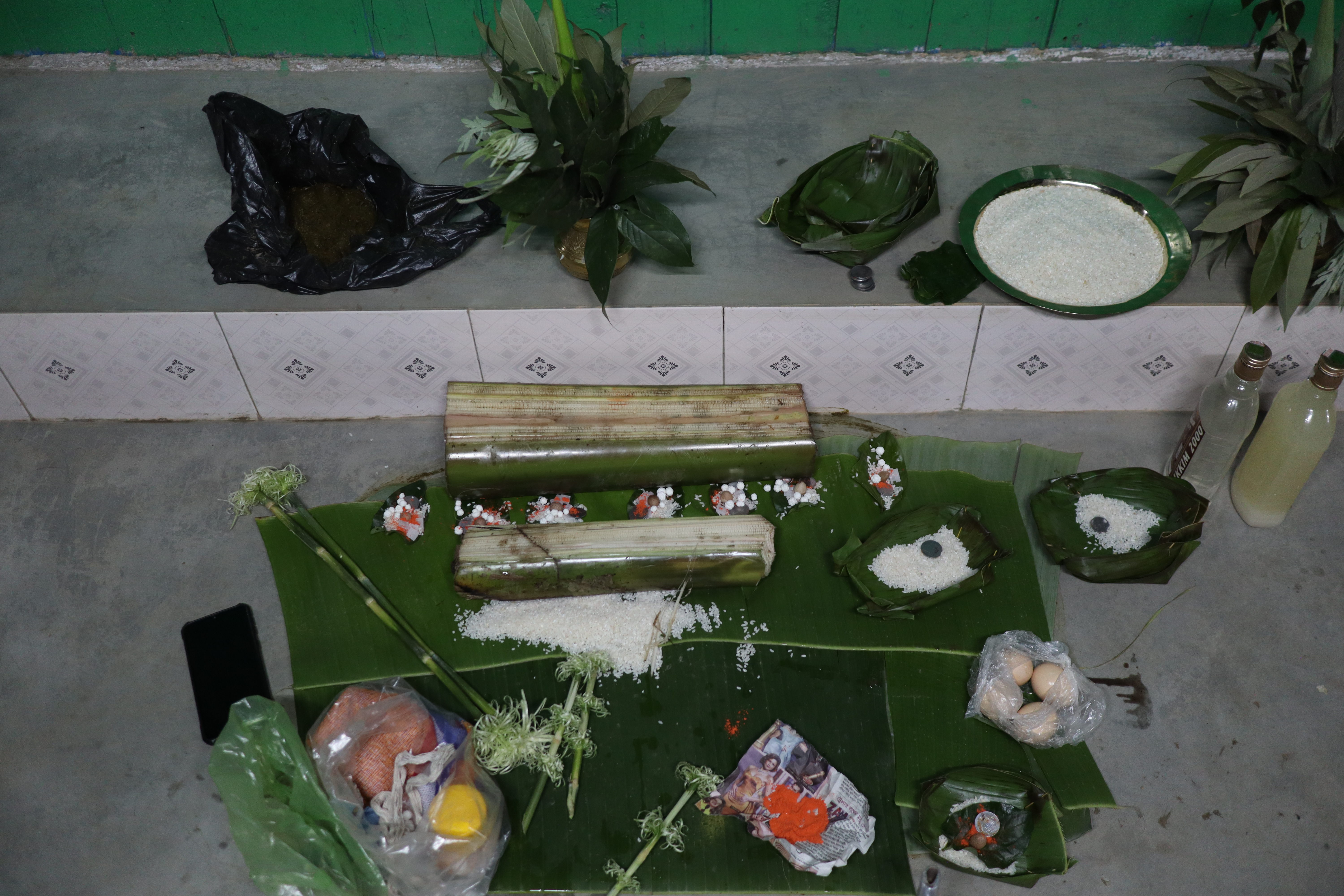
Damsa: A firm banana stalk interior laid above the banana leaves to hold the sticks upright.
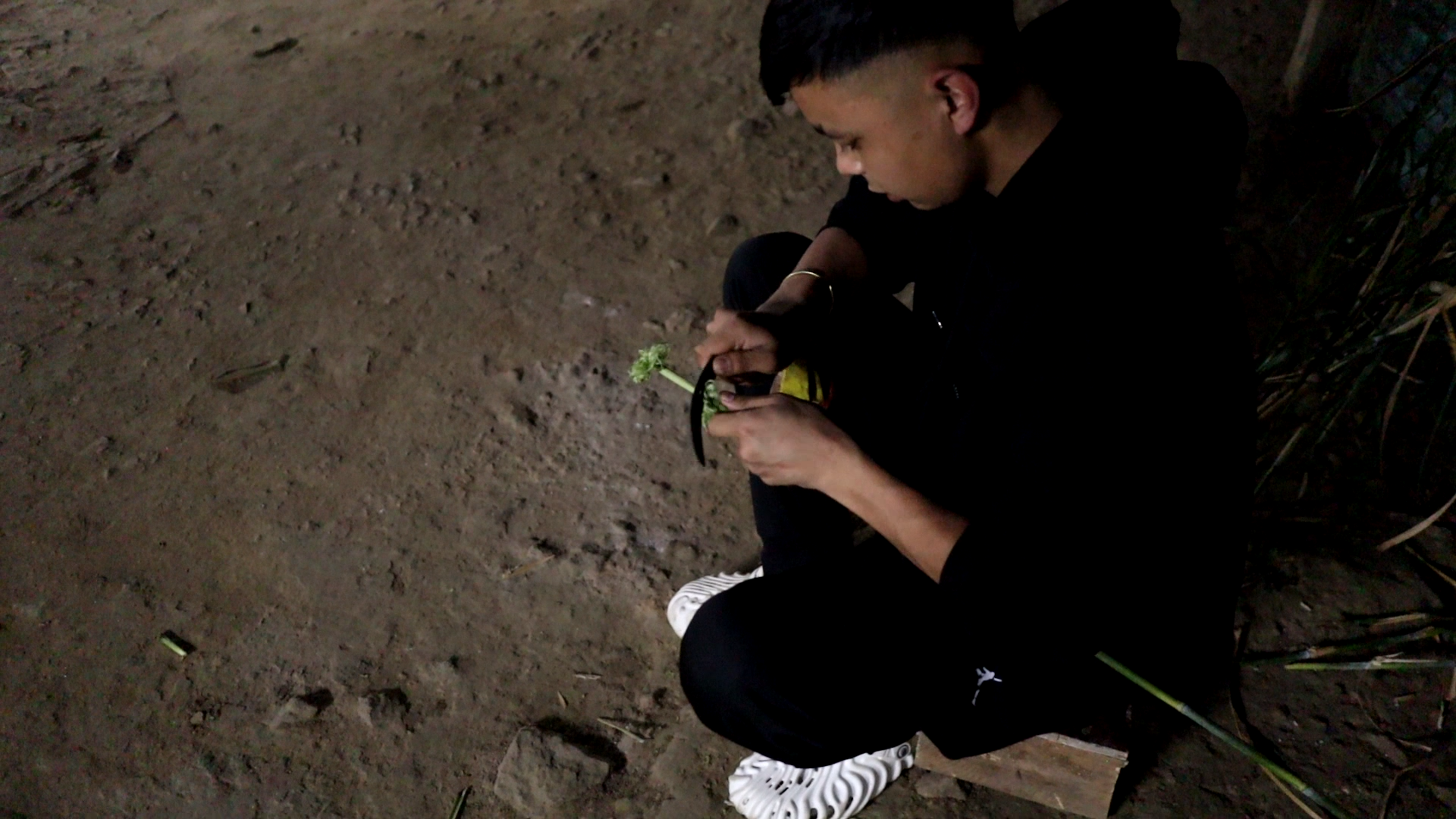
Ghungring Sticks:
3 sticks are placed upright on the damsa.
Each stick has:
3 layers of shavings on both sides
5 layers of shavings in the middle

3. Kaulo Ko Patha (Avocado Leaves)6 leaves total
2 tied on the shaman’s hips
2 on the shaman’s hands
2 on the kalash (ritual vessel)
>4. Chabuk Ko Patha (Whip Leaves)6 leaves total
7 leaves are placed near the setup, symbolizing spiritual cleansing and strength.
5. Ritual Offerings & Symbols
Akchata(blessed rice mixed with vermillion) and .kacho chamal (uncooked rice)
7 round supari (areca nuts)
7 kapoor balls (camphor/naphthalene balls)
Coins:₹1 coins (symbolic of local offerings) ₹5 coins or 5-dollar coins (cross-cultural symbolic value)
3 Duna(leaf bowls)used to hold offerings
2 Wabuk/ChindoSacred Rai vessels placed at the ends.
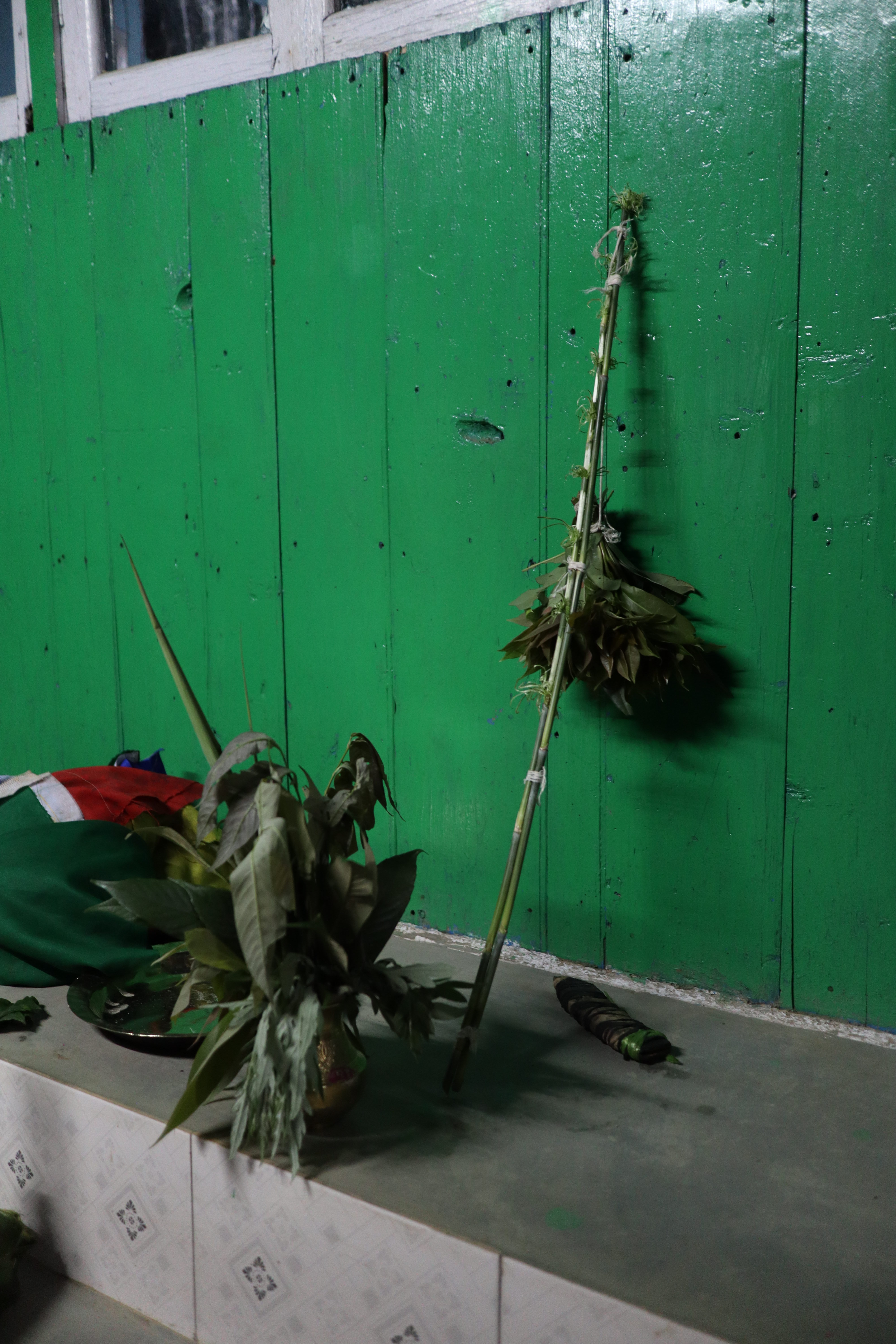
6. Kalash (Vessels)
2 kalash each containing:
Kaulo leaves (wild avocado)
Katush leaves(wild chestnut)
Titepati (Artemisia/Mugwort)
Amliso leaves (Nepalese broom grass)
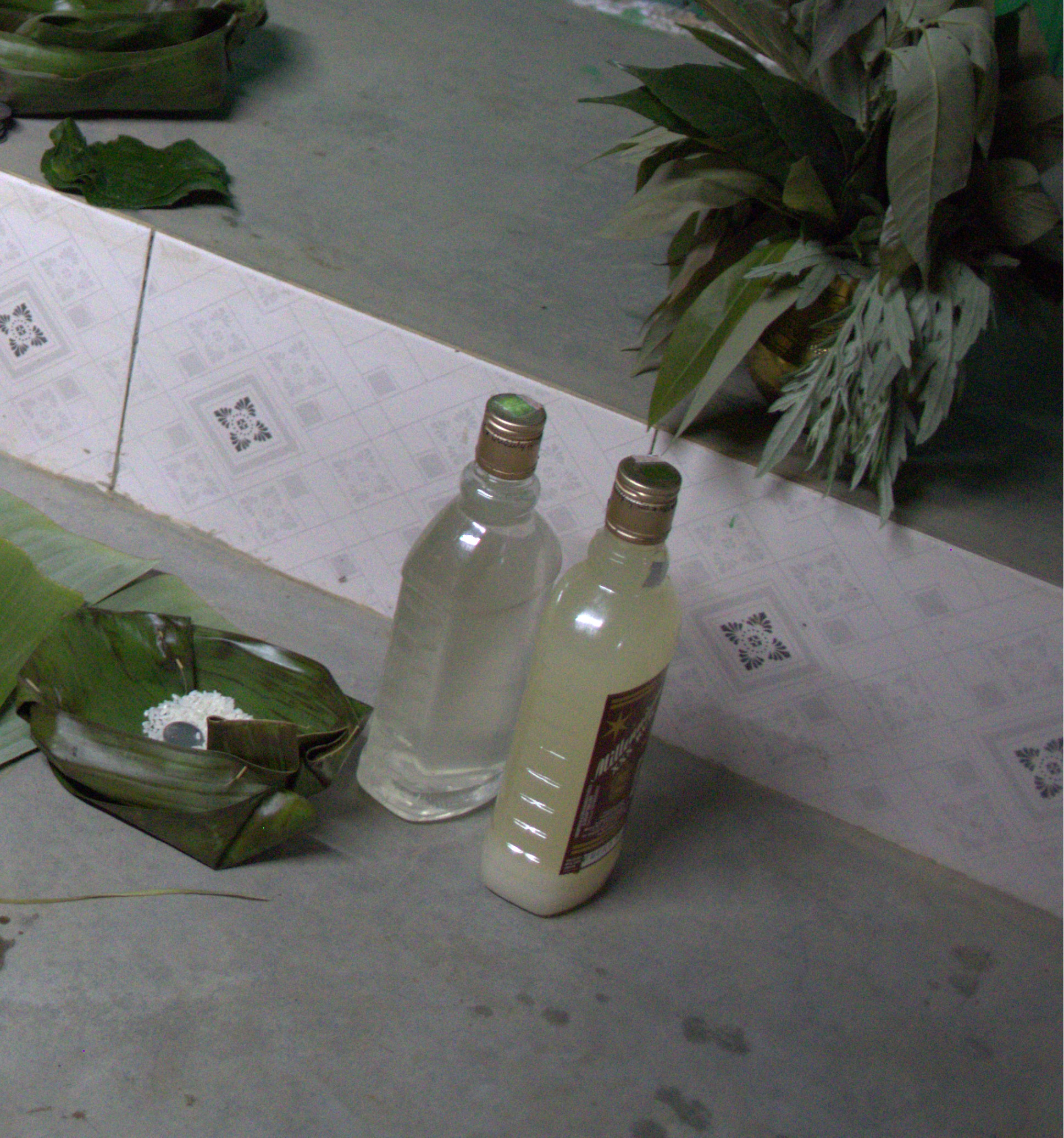
7. Additional Ritual Elements
1 bottle of alcohol
Rice wine:often home-brewed, for offerings and invocation
Eggs: used in fortune telling and spiritual diagnosis
Bechuk (Ginger):central to the fortune-telling process
Hasiya (Sickle)kept on the side to cut the ginger during the ritual
Fulmithai (sweets)offered to appease spirits and ancestors
.Performed By :The Shaman (Jhyakri) sets up and conducts the ritual, channeling ancestral spirits, nature deities, and invoking healing energies.
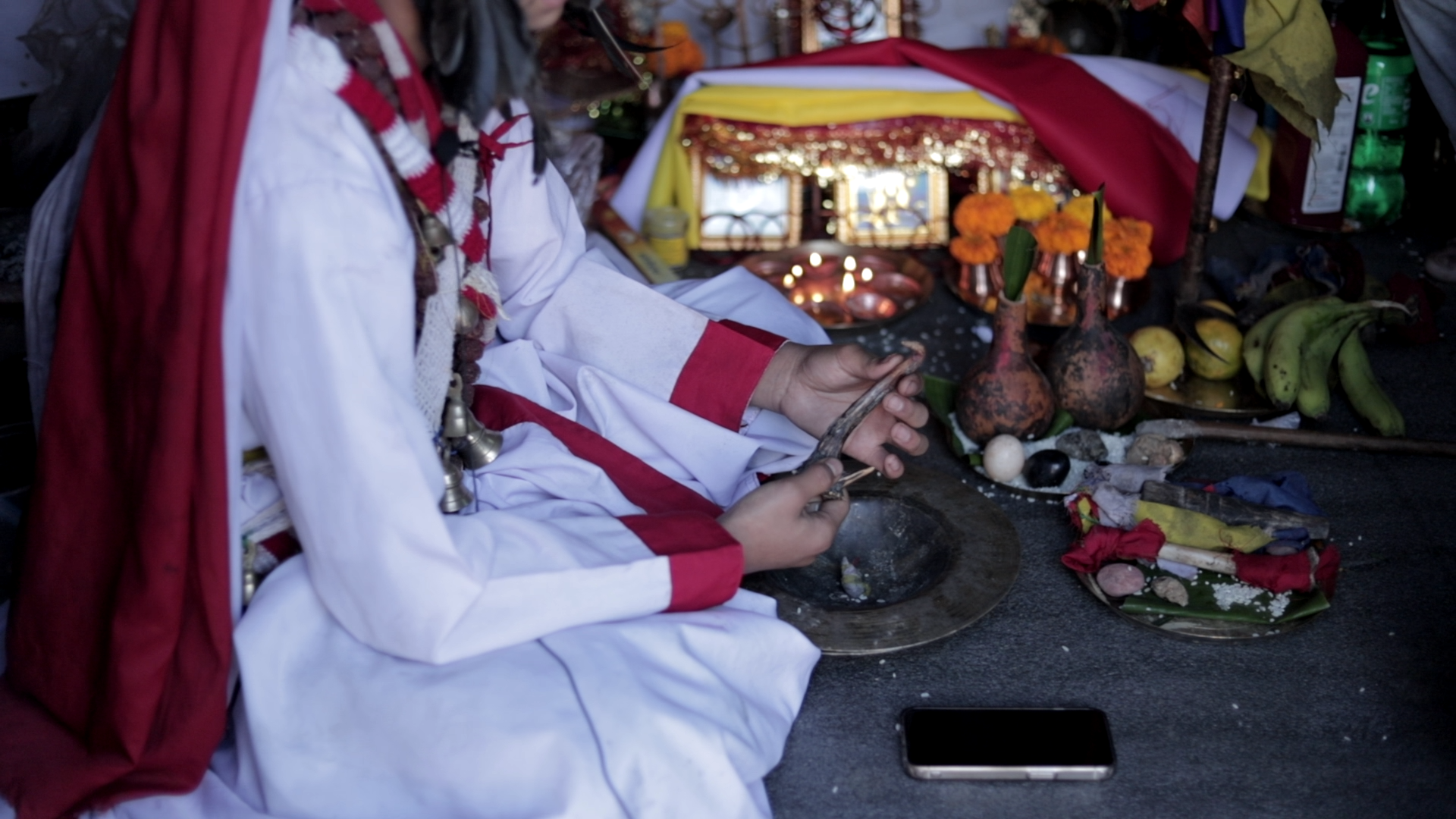
Antlers
Symbol of connection with nature and spirit animals. Often associated with forest spirits and used by the shaman (bijuwa or mangpa) to channel animal energy during trance. They may also serve as totemic items, invoking the guidance or protection of ancestral animal spirits—especially deer, a sacred animal in many indigenous Himalayan traditions.
Bones (often from sacrificed animals)
Represent the physical vessel of life and are a conduit to the spirit world. Used in the Chinta ritual to communicate with the dead or honor a sacrifice made on behalf of the deceased
Sometimes bones (often from chickens or goats) are used in divination, where shamans interpret patterns or cracks after burning or casting them. Bronze Plate (often called thali or pati)
Used as a ritual offering plate—it holds:
Rice wine
Flowers
Seeds or grains
Burning incense or oil
"RICE WINE OR JAR:"
Offering to Ancestors and Deities:
In rituals like Chinta, marriages, or birth celebrations, rice wine is offered to the Suptulung (three sacred stones) and ancestral spirits. Pouring rice wine on the ground or near sacred sites is a way to honor and invite ancestral presence
Medium for Communication:
Shamans (mangpa or bijuwa) often consume rice wine before entering trance states, believing it opens spiritual channels to communicate with spirits or diagnose illnesses. Purification and Blessing: It is sprinkled or offered as part of cleansing rituals, especially during death rites, to purify the space and guide the soul.
It’s traditionally served during festivals (like Sakela) and gatherings, bringing people together.
"CHULADHUNGA OR SAMKHALUNG / SUPTULUNG"
Chuladhunga, a sacred triangle of three stones nestled in a space known as the Samkhalung or ChulakothaThe designations and functions of the three stones differ across.Rai clans,particularly based on the Pachha(lineage or sub-clan). For the Bantawa clan, the hearth stones are referred to as:
Makhalung-Symbolizing the spirits of female deceased members and, in certain situations, called on for women who are still alive in rituals.
Pakhalung-Left for the spirits of deceased male members and called upon in rituals relating to living males.
Ramilung-Linked with guardian spirits or lost souls, called upon to guard and protect the family.However, some clans of the Rai community also regard Ramilung as a stone that symbolizes the 'Hunters', reflecting the belief that the Rai people were originally hunters.”The Chuladhunga occupies a key position in significant life-cycle ceremonies and religious rituals. Rituals like Pitripuja involve the presentation of offerings where traditional products like rice, millet, wheat, tongba (millet beer), and flowers are presented around the hearth. The offerings are used to appease the ancestors, receive blessings, and ensure balance between the world of spirits and the home. Prior to and subsequent to important events in life—such as birth, marriage, and death—the Chuladhunga is ritually invoked.
Balam – “The Soul Medium in Chinta"
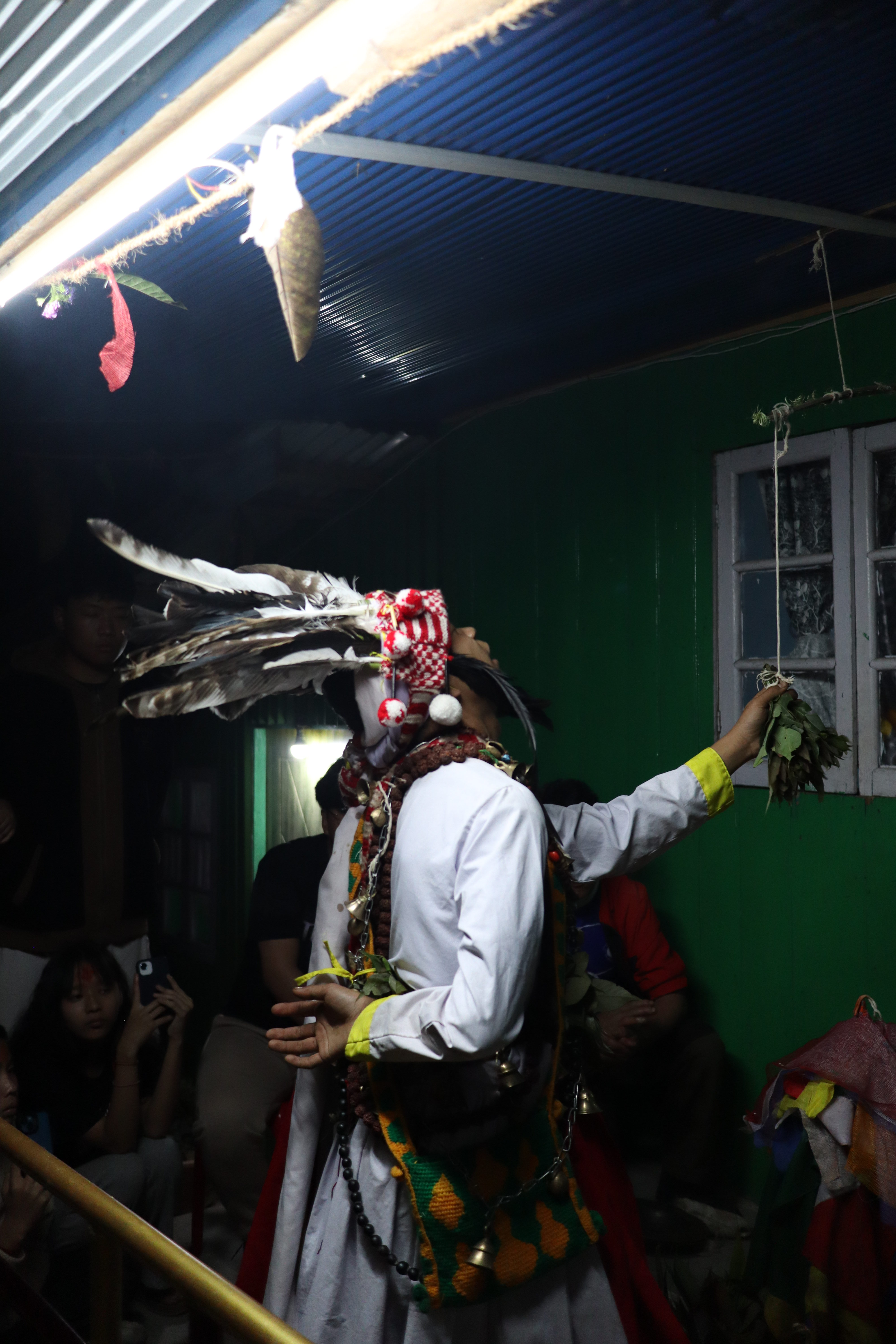
This is Balam, a sacred assemblage of nine-layered leaves — kaulo (local avacado), katush (chestnut ) , titepati (mugwort ) and amliso (Nepalese broom ) l— tied and hung upright, facing downward. Deeply symbolic and integral to the Chinta death ritual, it acts as a spiritual medium to capture wandering or fragmented souls — whether from living beings struck by trauma or from the realm of the departed. Often referred to as sato putlo ureko, this structure embodies the shamanic belief in soul retrieval and protection. During the ritual, the shaman invokes, contains, and ultimately restores the soul to its rightful place. Balam is not just foliage — it is a lifeline between the visible and the unseen.
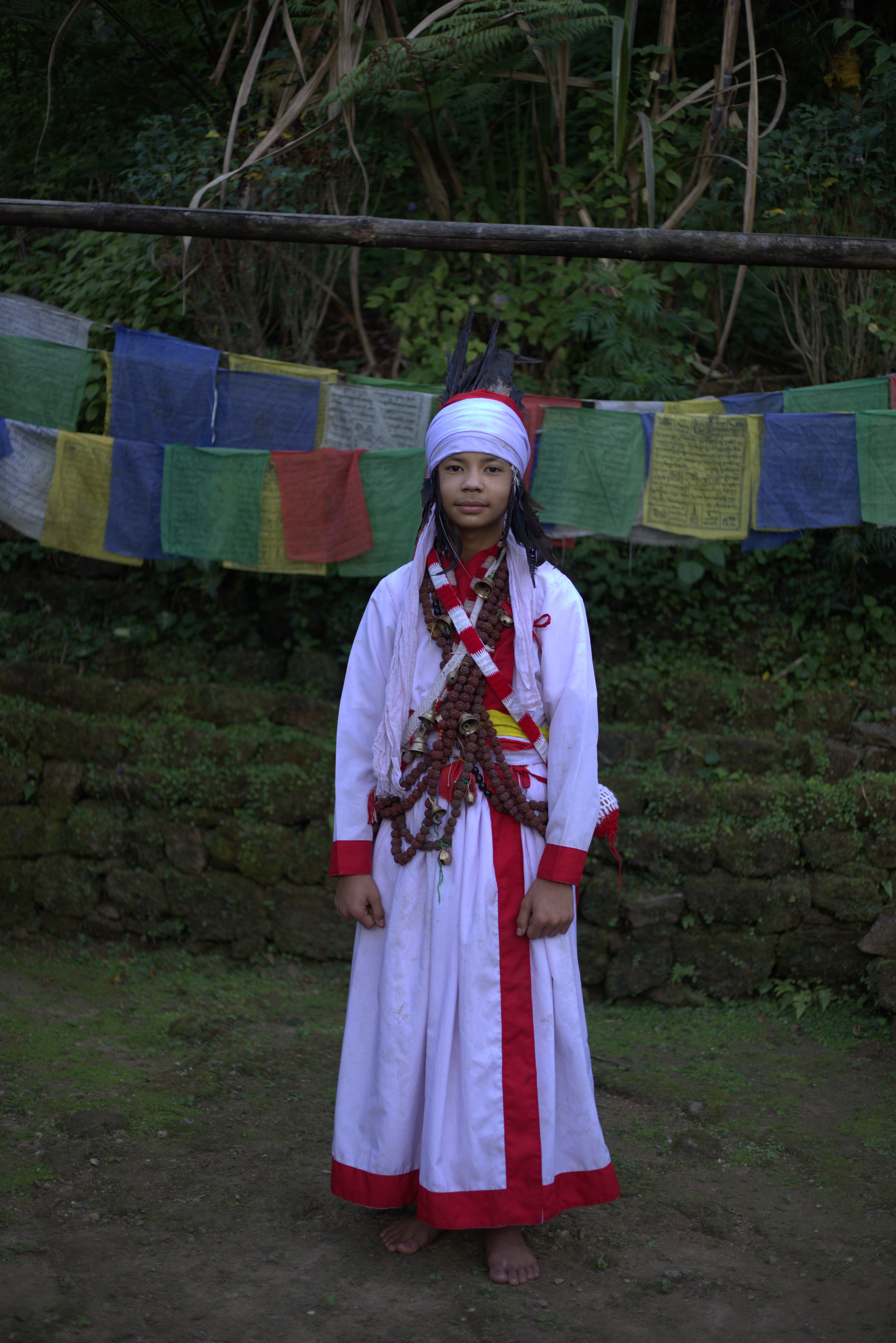
"The Sacred Attire of a Mangpa – Dancer Between Worlds”
Clad in symbolism and ancestral memory, the Mangpa or Shaman wears the sacred Sayabung — a powerful headdress adorned with dumsi ko kara/ (porcupine quills), feathers of the cock, the majestic baaz (eagle), and the kalij bird — connecting sky, earth, and spirit.
Wrapped in red or yellow feta, representing the teen chula dhunga (three sacred hearth stones), the Sayabung crowns the shaman’s role as mediator between realms.
Draped in a white jama (frock) — a symbol of purity and transformation — and rhythmically ringing ghantis (bells) tied outward to match the sacred steps of the Mundhum chants, the shaman calls in spirits, ancestors, and energies.
He carries the traditional Nanja, a handwoven Rai bag holding ritual objects: akcheta (sacred grains), aduwa (ginger), and dumsi ko kara, echoing the tools of healing and summoning.
Around his neck, long malas of rudraksha and snake bones serve as protectors and powerful totems, embodying spiritual resilience and ancestral strength.
This is not just clothing — it is sacred armor, worn in rhythm with the spirit world.
Tools of the Spirit Walker – "Rudraksha, Bells, and Serpent Bones"
This image showcases three sacred items carried by the Mangpa (Shaman), each holding deep ancestral and spiritual significance
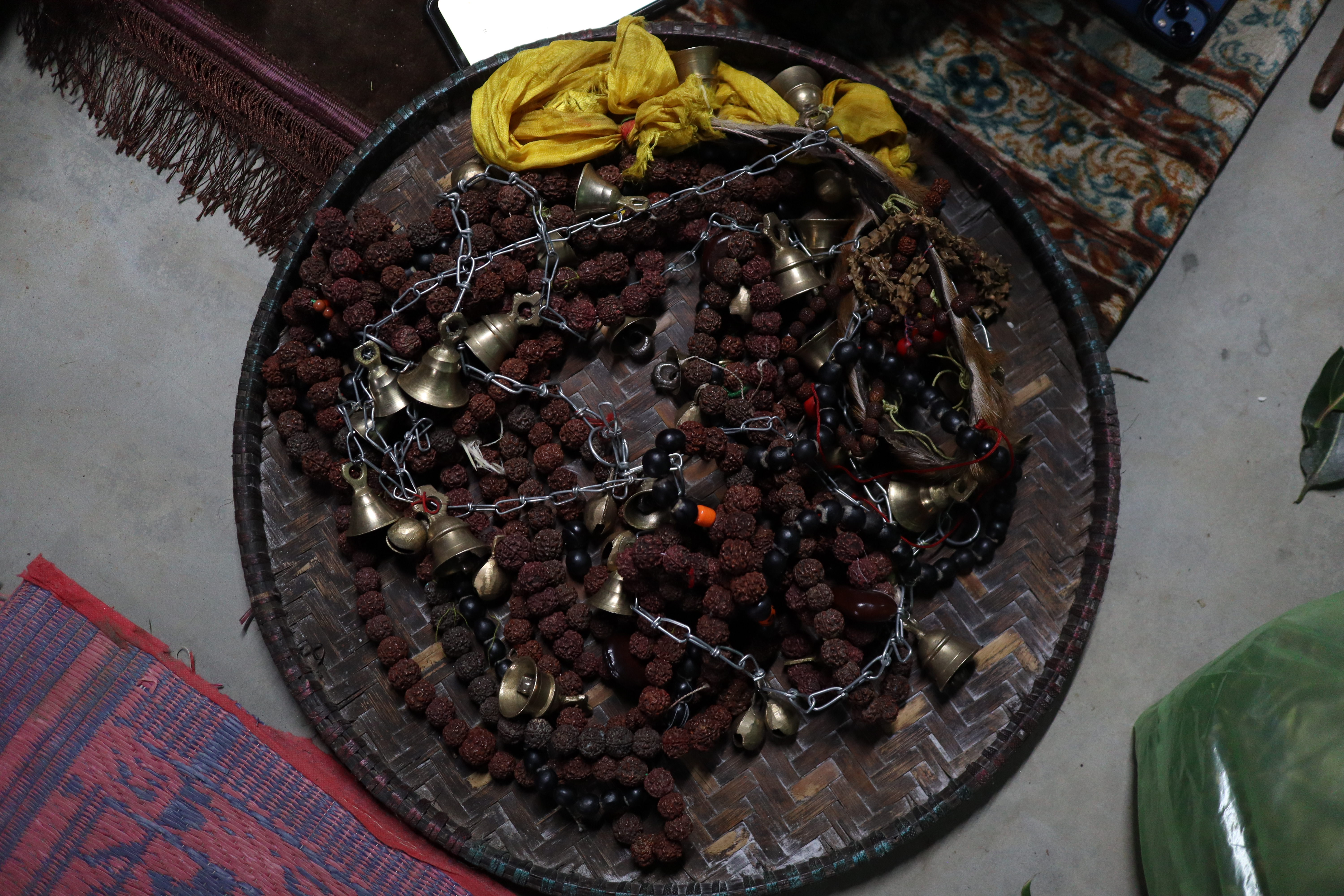
Rudraksha Mala – These natural seed beads are worn for spiritual strength and protection. They aid in grounding the shaman’s energy and enhancing focus during ritual chants and trance work.
Ghantis (Bells) – Attached to the shaman's garments, these bells resonate with every movement, aligning with the rhythm of the Mundhum chants. Their sound is believed to call spirits, cleanse the space, and guide the energy of the ritual.
Snake Bones – Often worn as long necklaces, these bones symbolize transformation, ancient earth wisdom, and the cycle of life and death. They act as protective totems and are revered for their connection to primal energy.
Labha Taneko – "Sucking Out the Malice"
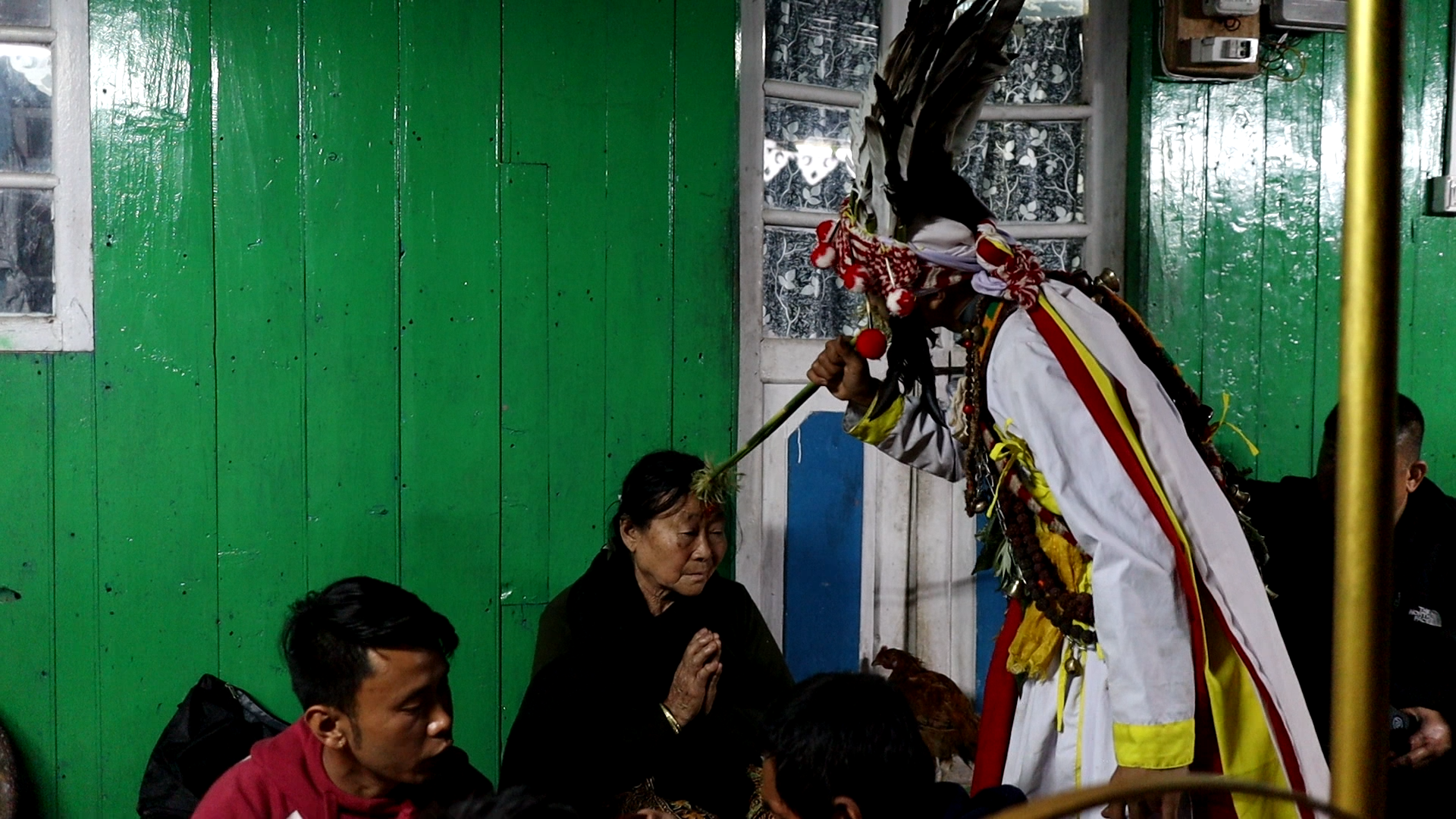
In this photograph, the Mangpa (Shaman) is captured in the sacred act of Labha taneko — the intense ritual of drawing out negative, malicious energies from the home during Ghar Chinta. Through deep chants and trance, the shaman sucks the harmful spiritual residue, which is believed to sometimes manifest as khoon (blood) — a symbolic representation of the darkness being removed.
This moment reflects a powerful intersection of body, spirit, and ancestral duty — where the shaman becomes both healer and vessel, cleansing the space and restoring spiritual harmony.
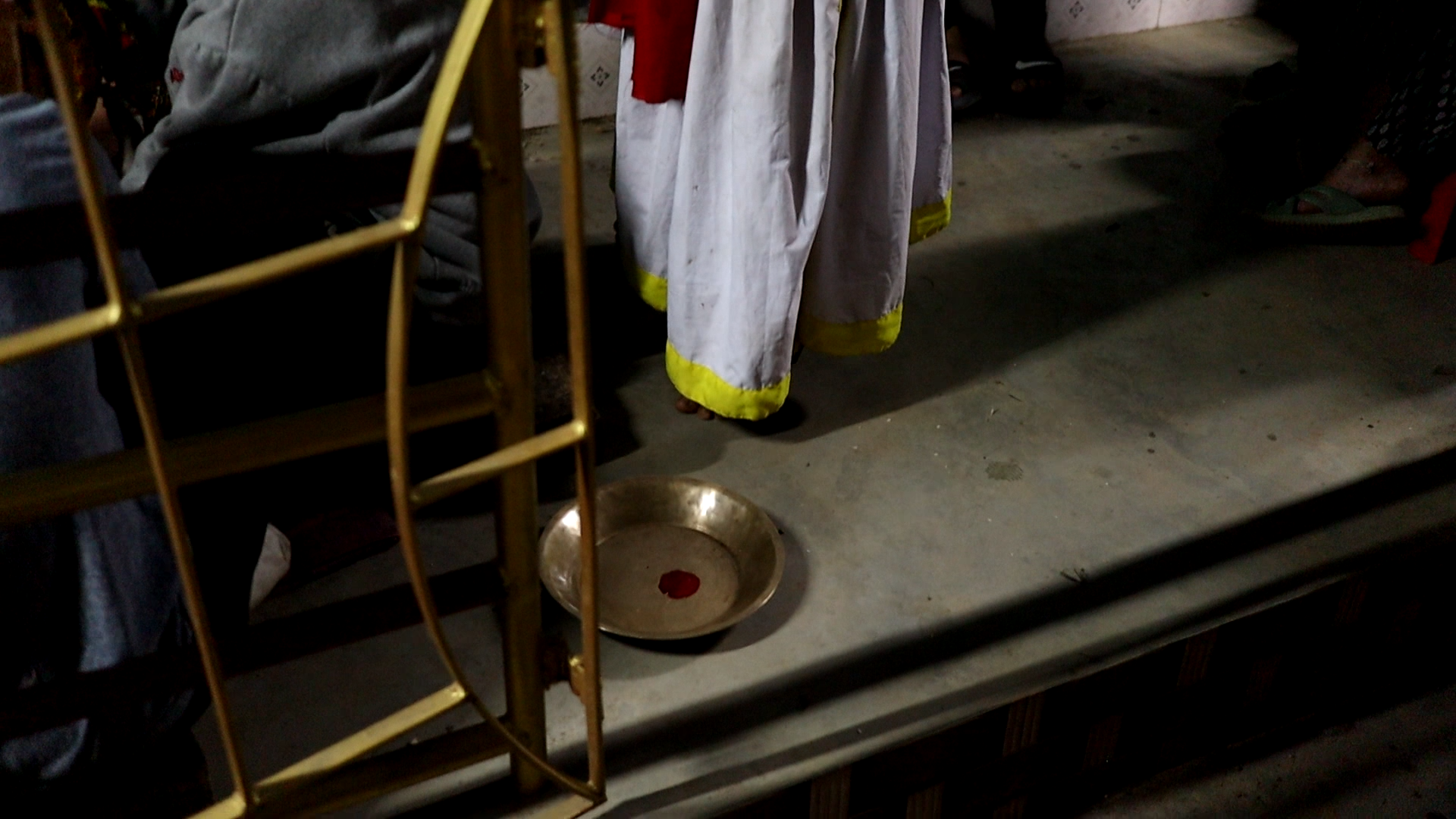
Khoon of Labha – The Manifestation of Malice
This image captures the raw aftermath of Labha taneko — the sacred act where the Mangpa (Shaman) extracts deep-rooted negativity or harmful spirits from a person or space.