"Hongku Maang: The River Spirit"
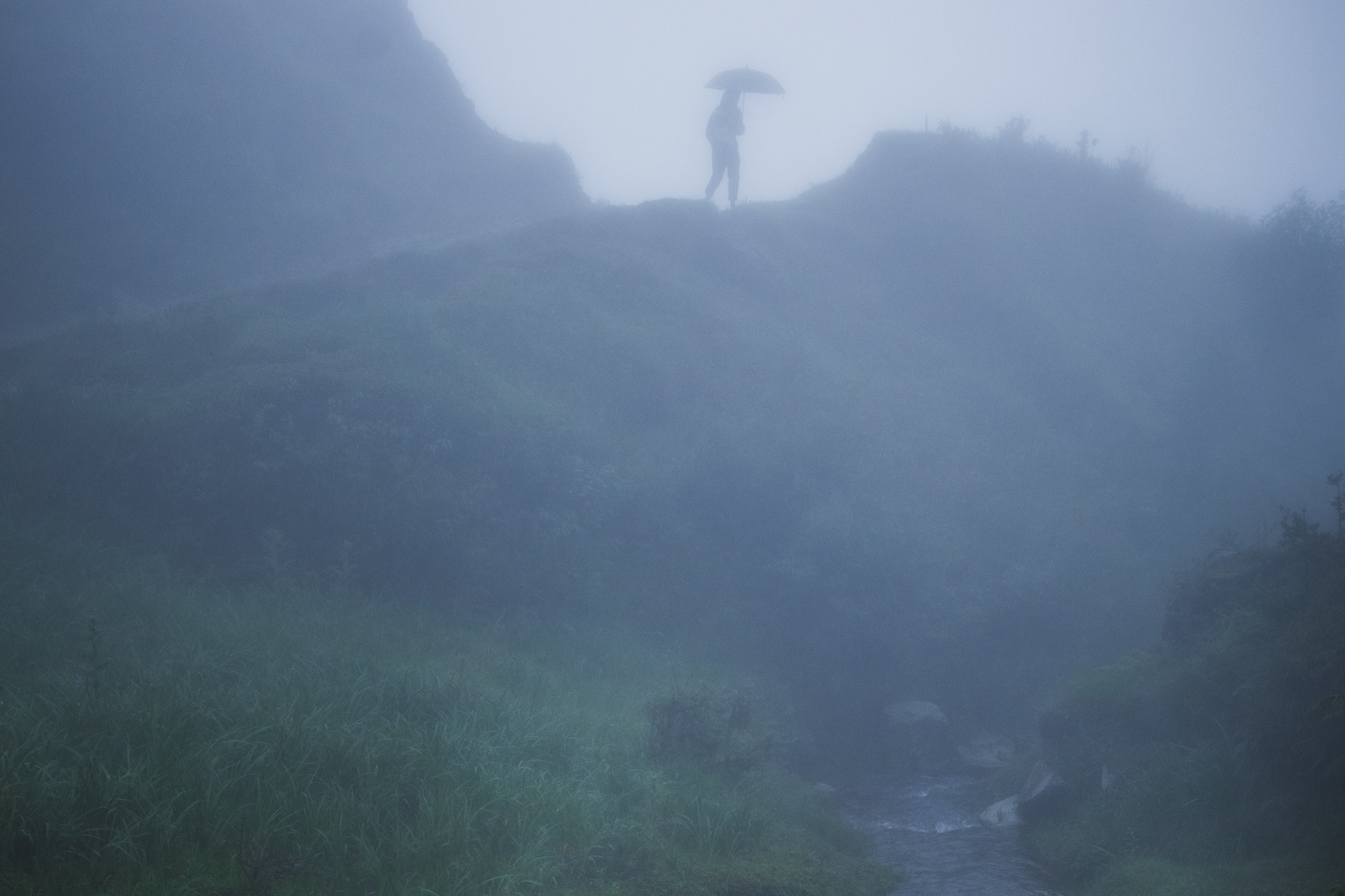
“She stood as gargantuan figure facing the waterfall, long curls of hair covering her till the toes. As if she was dressed in white with few beads like ornament that I hadn't seen being worn by anyone. She also held a Kombi, a traditional knife. Only it's only me hiding behind a bush; petrified in silence and the thrushing force of water that echoes around with minute water droplets.” says Sancha Man Rai a Khambu Shaman residing in the hamlets of Kalimpong.
The Khambu Rai community are still taking over the age old tradition of animistic belief; worshipping nature and spirits. The Samkha or the sanctum sanctorum is a special fire ground consisting of three erected hearthstone; revered and dedicated to the spirits. The Samkhalung is believed to hold to hold every spirits of the living members and deceased ancestors of a family. These are things that are in full light but one of the rare things in a Khambu traditional way of life is been told to not sit in the stairs, whistle in the river areas, and even not to enter someone's Bhakari (grainery).
In such cases, Hongku Maang a spirit of both wrath and purity has reserved a special place in the houses of many Khambu Rai. The oral tradition contains how numerous incident and tales of her notoriousness and sightings. Many culture experts and the community shamans believe her origin to be the Bontawa river in present day Nepal. The Nakchong or Mangpa, heads of the Khambu animistic faith have always spoke about her as the most pure and old spirit that is wandering the rivers, creeks, lakes and forest, from the time of creation. It is said that she can be equally loving and also equally dangerous; only being handled and worshipped by the strongest shamans.
In Bantawa Rai Language “Hongku” means “river” and “Maang” means “Godly spirit”; she is the spirit of the river and other inland water bodies. According to the community of people she is often sighted near river banks and creeks. Her face is not seen by anyone and is always covered with her large masses of hair. She comes in a resplendent state with a white clothing and precious beads.
Early sightings during the morning time can be with a small toddler and inscrutably she ages though out the day; during the afternoon she is a youthful lady and in the dusk she is a senile greyish woman covered in wrinkles. Sometimes people have seen her carrying a Towat or Tumsey (traditional wisk basket) carrying grains and sometimes empty. This is considered to be a sign of fortune if she carries a full basket and a misfortune in case of an empty one.
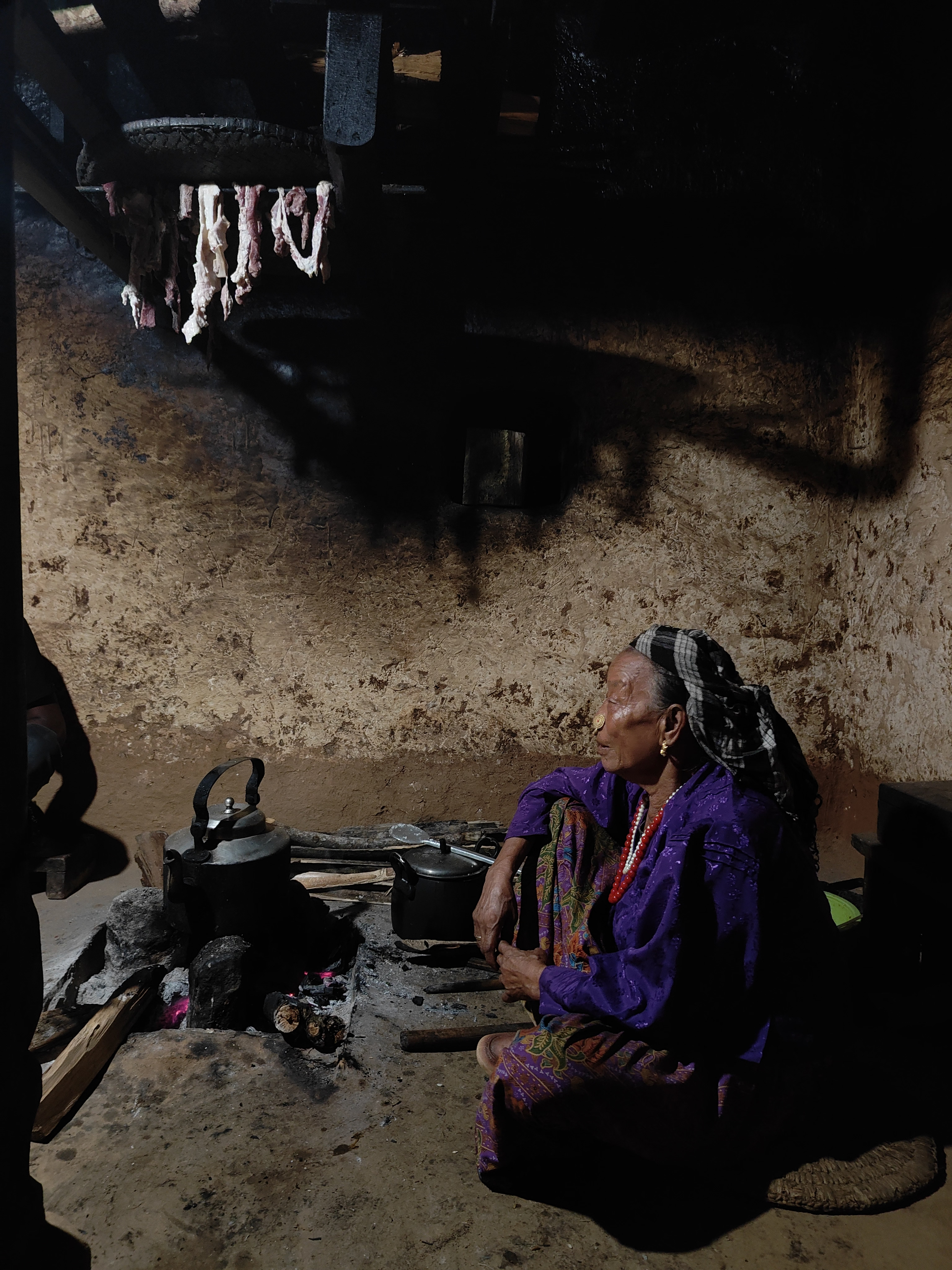
“She used to come during the midnight and move the wobbly door and climb to the store room above where we kept our grains.” my grandmother always shared these stories whenever I asked about Hongku Maang.
The Khambu Rais of Nepal, (specially of Bhojpur) Darjeeling, Kalimpong and Sikkim supposedly still keep this spirit as a gaurdian and provider.
This spirit is worshipped by the Bantawa, Koyou and some of the few Chamling clans. Hongku Maang are of two forms, where one is referred to as the “Daijalu Saha Kal” which are kept within the houses and the other one that is worshipped by the shamans; kept outside the house.
Tagurima Hongku Maang are ancient spirits that have been associated with a family for over 5 to 7 generations and are kept by shamans. These are full of wrath and power, which needs special attendents during worship. Whereas, the Sumlekma Hongku Maang are the innocent and loving ones that are known to follow daughters of the family after marriage.
These are the ones kept inside the house or Daijalu Saha Kal; adored for fortune over grains and cattles. She is believed to put grains into the grainaries when she is worshipped well; effervescent to bless the family. And these types are often gifted to the daughters when moving to her husband's house after marriage. In some cases she herself follows the bride our of emotional attachment.
The ones that are kept outside have been worshipped by the Shamans as a source of energy, knowledge and protection against evil spirits.
As animal sacrifices are common to most of the tribal animistic culture; Hongku Maang unlike any other maang of the community is stressed to be given a sacrifice, because she is a very pure and peaceful if the worshippers can keep blood away. But in case of a sacrifice she can turn dangerous, and in absence of a sacrifice during her rituals can be remorse and curse the family. The reason why children were told not to sit on the stairs and enter someone's Bhakari was because that's were they reside acting as a protector and provider. During the important annual worship of Donglasa and Dongdawa (Udhauli and Ubhauli) she is always given her part of the new crops after the ancestors.
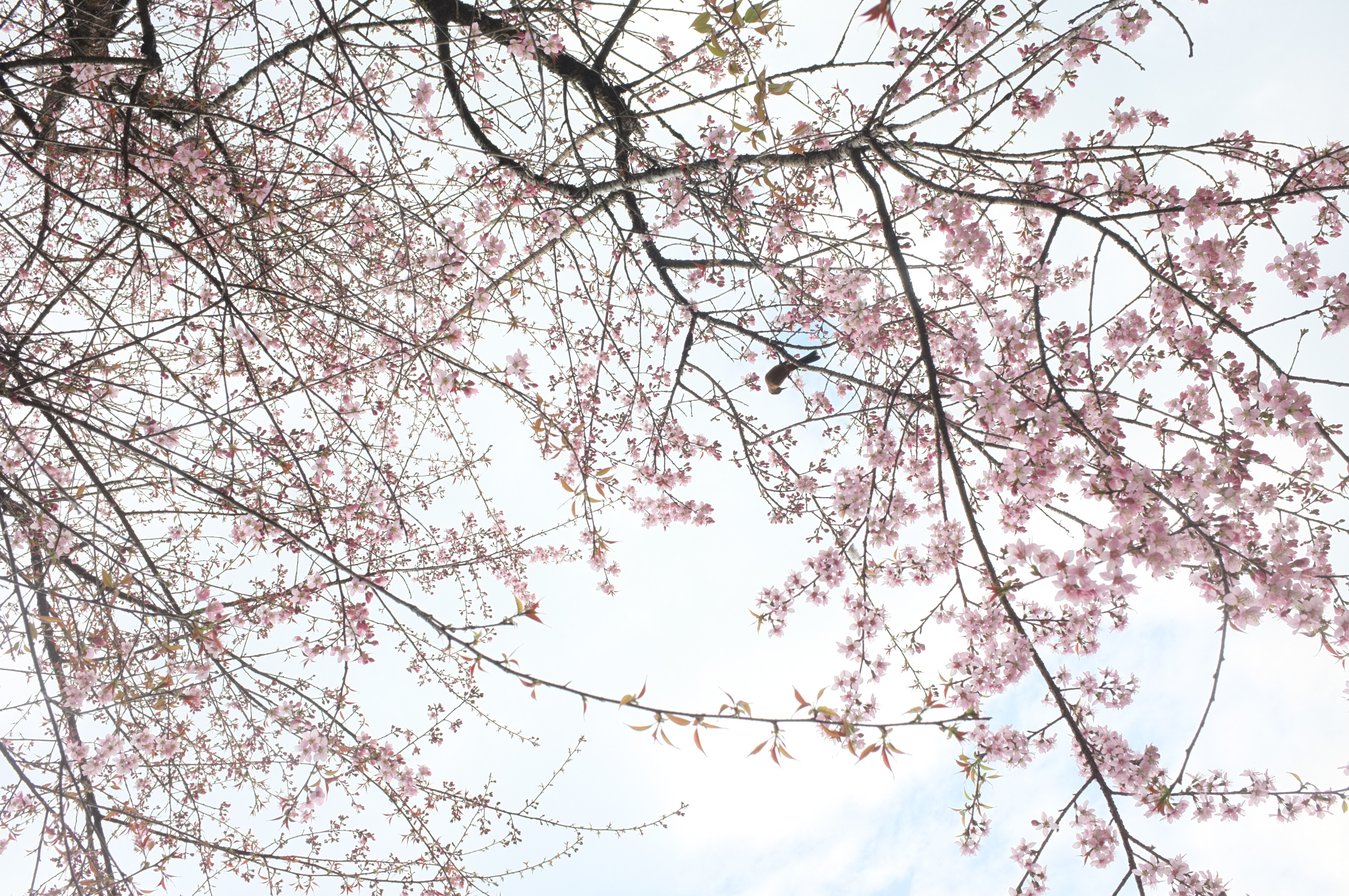
Worship of Hongku Maang is done annually during the late spring where beautiful sublime flowers of Prunus serrulata or cherry blossom take place. She loves this flower and the children of a Khambu household is often taught not to bring that flower to home and is forbidden to burn it; as it attracts wandering Hongku Maang.
Her sightings are still a mystery and her tales of teasing travellers who walk past rivers and streams are scarry to many but the Khambu community and Hongku Maang have a firm connection with eachother from generations. Her stories of anger and love are still prominent in the oral tradition of Mundum and lives in the stories to tell during a gathering.